If you’re planning to write a clinical paper summary or scientific literature review of a published journal article from a peer-reviewed medical journal, these useful suggestions will help guide your writing.
Reading clinical research in medicine and science forms the foundation of medical writing. Your reading might be used to inform your health writing projects and articles, or for background to learn more about the health niche you work in.
When it’s time to write a clinical paper summary of a research paper, it can be quite different to simply comprehending research findings. It’s easy to underestimate how much time you may need to write a summary compared to reading papers for the background.
What is a clinical paper summary?
A clinical paper summary is essentially a journal summary, usually designed to be used for a specific purpose such as marketing or education.
Writing a summary involves working to a project brief, which will outline how long the summary needs to be, the intended audience and the writing style. It also involves selecting relevant content for key messaging and ensuring you’re accurately transcribing the results.
If you’re wondering how to make sure you’re meeting all the requirements for writing an article summary, have a read of these few suggestions so you don’t miss any key aspects.
1. Know how the clinical paper summary will be used
Before you even begin reading the published article, it is important to understand how the clinical paper summary you write will be used. This means understanding the briefing document for context to determine the content, tone and style.
For example, you may be writing a clinical summary for a pharmaceutical company as part of their sales material. Today most medical sales personnel use mobile devices to display their content. So in this instance you may need to structure the content according to how it will appear on a screen, and ensure you accurately and responsibly represent any key messages in the summary that support the product’s brand.
2. Read the article properly
While this may seem obvious, reading a paper effectively can make a lot of difference in productivity. And if you do it properly, it can take longer than you realise.
Before reading a clinical paper, a great way to start is by scanning the whole article from start to end. This will give you a broad idea of the scope of the content and an overview of whether the hypothesis was met and how the methods and study design were used to gain results to draw a conclusion.
This first scan can also guide you to find the key points for when you read the article a second time.
On your second read you can pick up your highlighter and pen and take notes of useful content. Make sure you read the results published in the tables and figures. Which brings me to my next point…
3. Don’t forget tables and figures
The results of the clinical study are usually contained in tables and figures, and this is usually where the paper explains whether the results were statistically significant.
When reading the results make sure you note any serious and adverse events (including mortality outcomes) and patient baseline characteristics. Your clinical paper summary should include this information if it is significant.
4. Explain the clinical finding in your own words
Now you have finished reading and understanding the paper, you can commit pen to paper! This actually may be the less time consuming part of the project, as long as you have accurately comprehended the article.
You will know when you have understood the paper when you are able to explain the paper in your own words. If you find you are re-writing sentences that mirror the words used in the study, this means you may not have understood the study properly and may need to go back and have another read of the clinical paper.
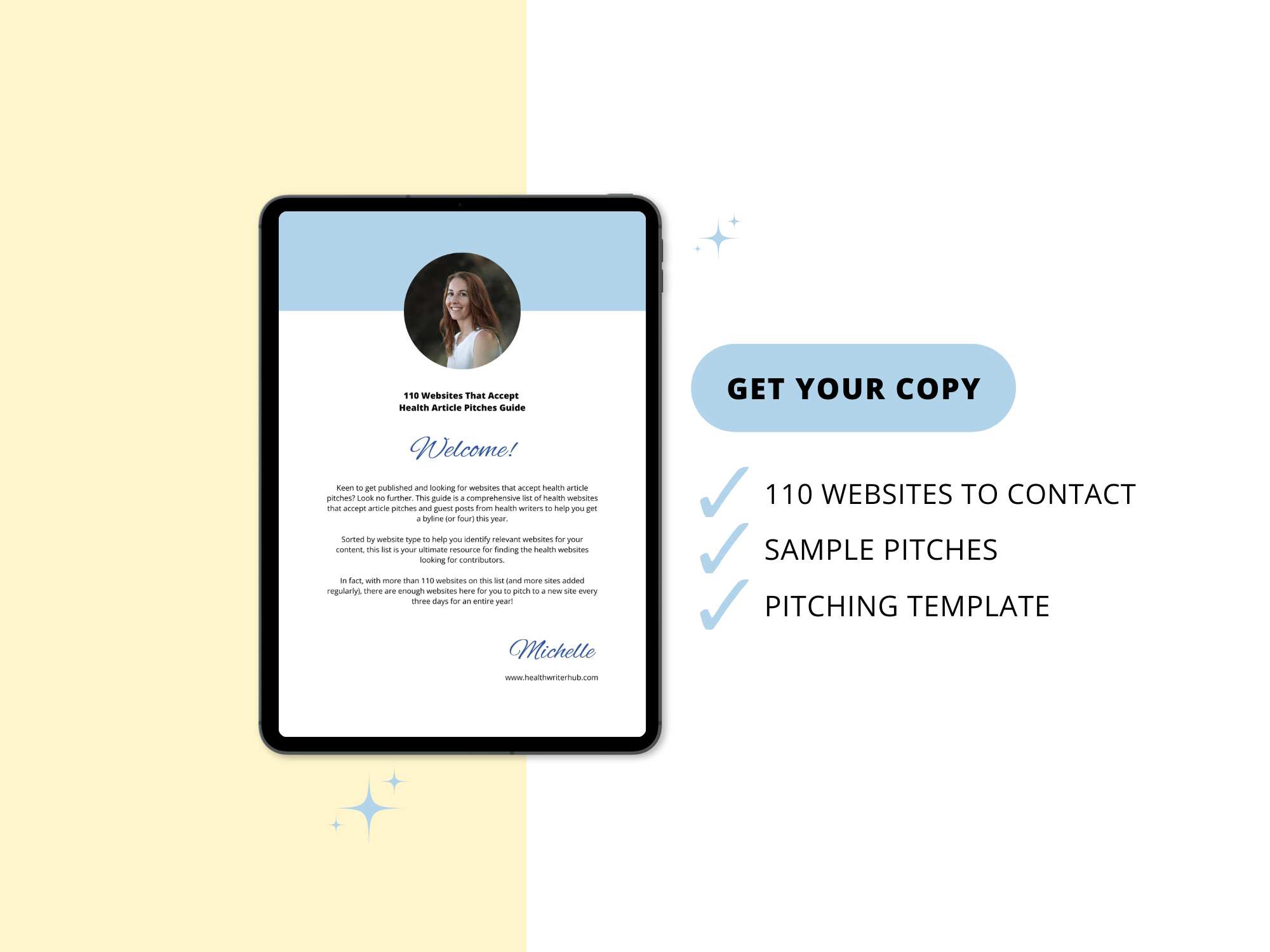
- A detailed list of 110 websites that accept pitches from health writers
- A description of the content each website typically publishes
- A pitching template to help you write the perfect pitch
- Sample pitches that work!
When writing the results, take care not to extrapolate the research findings to meet key messaging in your brief.
You can expect the first draft you write to be too long. It’s likely your summary will need some editing to meet the brief, which also gives you an opportunity to double check all the values (such as p values) have been written accurately.
Do you have any suggestions for writing a clinical paper summary?