 Health communication is evidence-based, so health writers do research all the time. We need research for blog topics, news articles, and case studies using both Google and curated databases like PubMed.
Social media research expands the scope of information you can find online.
Writers use social media sources often enough that official style guides include reference formats, but a link or screenshot is sufficient for most blog posts and lay press articles.
Social media has firsthand accounts of current events
When you use social media for research, and Twitter in particular, you can hear news directly from the source.
Doctors on the front lines talk about PPE, and patients describe COVID-19 symptoms as they happen.
If you follow pharma and medical device companies, you get to see press releases about new approvals right away.
- Tom Hanks, a famous actor, detailed his experience of being tested for COVID-19 by posting on Instagram. He also posted about his self-quarantine in Australia and the process of donating plasma after recovering.
- Karl-Anthony Towns, a professional basketball all-star, posted a video on Instagram about his family’s personal struggle with COVID-19. He highlighted the importance of social distancing measures.
- Gilead Sciences, a biotechnology company, posted on LinkedIn that remdesivir received FDA Emergency use Authorization for severe COVID-19. I follow that account, so I found out about the new treatment approval immediately.
Reading firsthand accounts from conference attendees is another useful strategy.
Virtual conferences use social media
Follow the posts of conference attendees to get a heads up on new research results. Scientists and clinicians post explanations of their research months or years before peer-reviewed publications come out
All the worldwide conference cancellations due to COVID-19 will have a ripple effect on the dissemination of new research. The conferences that aren’t cancelling are going virtual, which means attendees will use social media even more than usual.
The national conference held by The Society for Editing was completely online this April, so writers and editors used the specific Twitter hashtag #ACES2020Online.
One of the most well-attended cancer research meetings has also decided on a virtual format this year, and social media will be heavily involved.
Conference hashtags are a quick way for health writers to hear about new research in a specific therapeutic area.
How to find the right hashtag
It’s easy when conferences choose the hashtag for you, but what about when you need to figure it out yourself? Hashtags aren’t always as predictable as #diabetes or #heartdisease.
Take the time to find relevant hashtags before you do your search. Here are a few tips that work across platforms:
- Find the account of an industry expert with at least 1,000 followers, and copy the hashtags that account is using.
- Follow credible accounts like local hospitals and medical organizations. The health writers behind those accounts are making sure they get the information right.
- Make sure the words are spelled correctly. No one is going to see the hashtag #coronovirus.
- Search for hashtags that appear in several posts each hour – or each day if the topic is less universally popular.
- Search for more than one variation on the same word. The hashtags #COVID19, #COVIDー19, and #COVID_19 are being used with equally high frequency on Twitter.
You can also search for words without hashtags to get broader results.
Make sure your newsfeed is in chronological order
When you search using a hashtag or just scroll through your newsfeed, you usually want to see the most recent posts first.
Remember that social media platforms are businesses that survive on ad revenue. They want to keep users engaged for as long as possible, and they have decided that chronological order is not the way to get clicks. Engagement algorithms may help optimize ads, but they don’t help you do research.
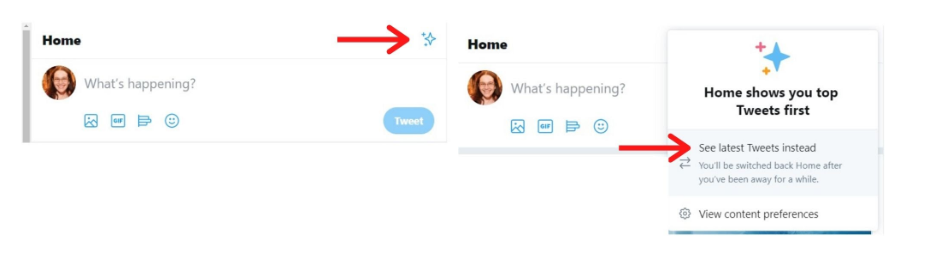
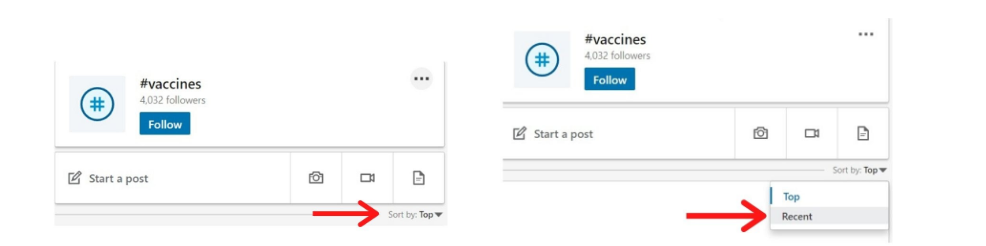
Twitter and LinkedIn default to the algorithm-determined top posts, but give you an option to continually switch your timeline to see the most recent posts first. You will have to make this change again every few days.
On your Twitter homescreen, the toggle icon is on the top right. It allows you to choose the latest tweets.
On your LinkedIn search screen (like this one where I searched for #vaccines), you will see the option to sort by recent results.
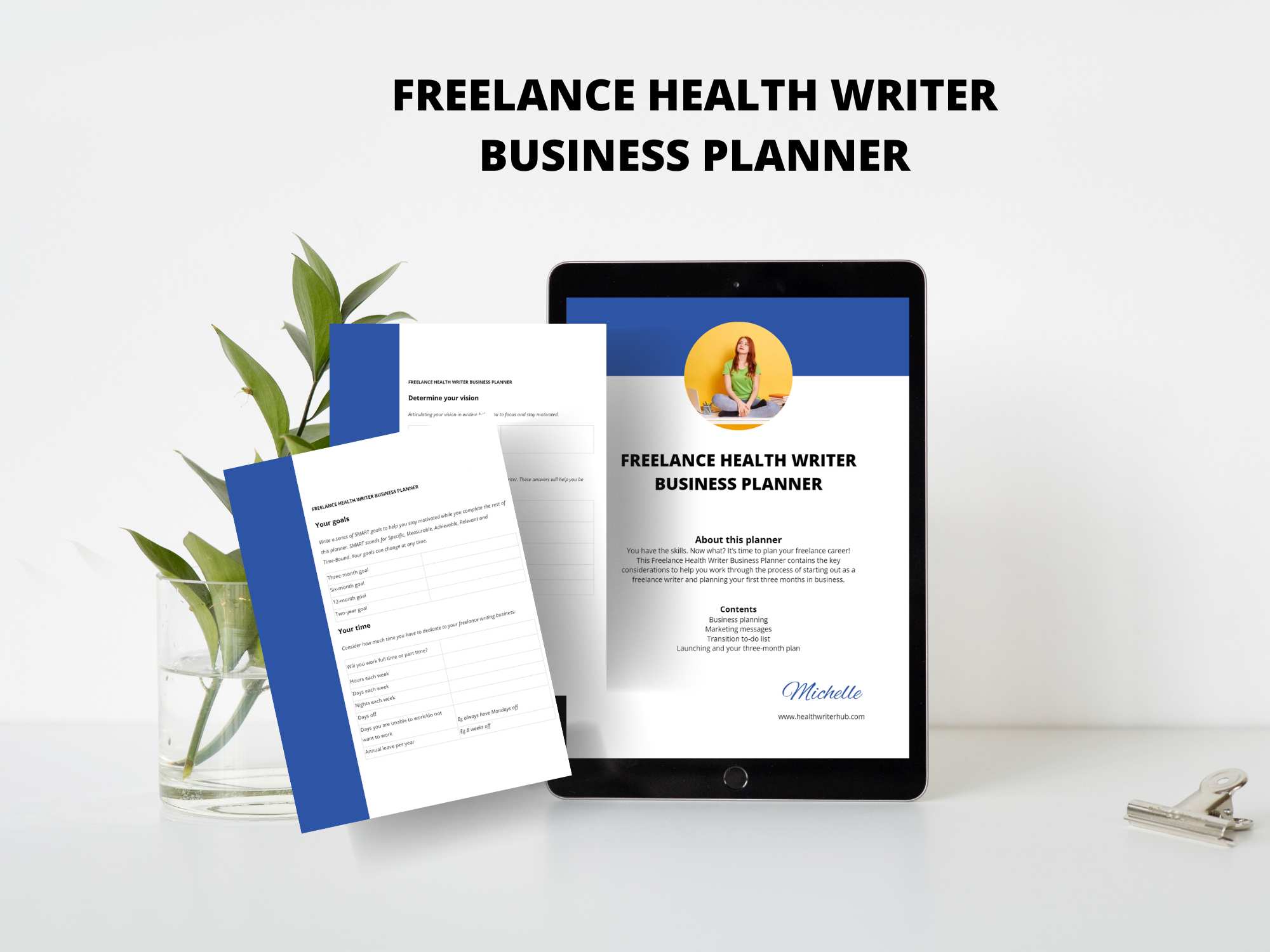
You have the skills. Now what? It’s time to plan your freelance health writing business launch!
If you want to become a freelance health writer but aren’t sure how to get started, this Freelance Health Writer Business Planner is the tool you need.
The planner helps you determine your career transition plan, marketing messages, target clients, writing services and more!
Remember that you are the curator of this information
Social media is one of the worst amplifiers of incorrect information on health and medical topics, so use this research wisely. As we’re in the midst of an infodemic, it’s important to share quality information on social media. As a health writer, you have the tools to identify misleading information.
Verify that the account is legitimate, double check that the post was published with some forethought, and use the information you find to lead you to additional credible sources.
Let me know how social media research helped you with a writing assignment!